Choosing the right tradesman to fix your chimney or fireplace
Reading time: 9 minutes
When choosing the right chimney and fireplace specialist, there are some key issues you need to think about. In this article, we’ll take you through them step by step.
- Choose someone with lots of specific experience
- Ask about HETAS registration
- Ask about Gas Safe registration
- Check whether they offer a free, thorough site survey
- Get a detailed quote from each tradesman you’re considering
- Ask what equipment a tradesman is planning to use
- Take advice about materials early on
- Ask who will actually be doing the work
- Never pay in full upfront!
Let’s look at each of these in a bit more depth.
Choose someone with lots of specific experience
A wide range of jobs fall under the ‘chimney and fireplace’ trade umbrella. They include everything from fireplace and chimney breast removal, external chimney reconstruction and repointing to chimney sweeping, the replacement of liners and the installation of wood burning stoves.
All of these tasks require different sets of skills, so it’s really important the tradesman you choose has lots of experience of doing your particular type of job.
Chimney and fireplace specialist Paul Blowers, of Heatsafe Installations Ltd, has been a MyBuilder member since 2012 and has an excellent customer feedback rating. He explains why using an expert is so important:
If your chimney needs work doing to it, you should use someone experienced in working on chimneys specifically. That’s because a general builder or bricklayer will sometimes get things wrong.
For example, they often put the wrong cowls on - the hood-shaped coverings on top of chimneys. And they need to know how high to build the chimney, too - the cowl needs to be at least 2.3 metres away from the roof. So ideally you should choose someone with lots of experience of working on chimneys on the same type of property to yours.
The same applies to getting a chimney swept’, Paul continues. “I would always advise you hire someone who specialises in sweeping chimneys, because I’ve seen more general tradesmen doing it using the wrong rods on the lining. You’ve got to be knowledgeable and up to date about what materials to use.
Paul Blowers of Heatsafe Installations Ltd

MyBuilder member Carl Lamoon, of Oxon Stoves, also has an excellent customer feedback score. He flags up some mistakes that are commonly made when non-specialists try to install stoves:
There’s a certain way the flue liner goes in - and there have been two or three stoves I’ve had to remove because they’ve had their liners put in upside down.
Another thing non-specialists sometimes do is give people closure plates that don’t properly fit the chimney.
Carl Lamoon of Oxon Stoves
As well as reading a tradesman’s MyBuilder feedback, ask to see photos of relevant work they’ve done - and if possible, talk to one or two of their previous customers. This will help you find out what they’re like to have around your home, as well as assess the quality of their work.
Ask about HETAS registration
HETAS is the official, government-recognised body that approves the heating appliances used for burning biomass and solid fuels (materials like wood, charcoal, peat, coal and various composite tablets/pellets).
Not all chimney and fireplace jobs require a tradesman to be HETAS registered. For example, you don’t necessarily need to be a member of the scheme if you’re just undertaking external repointing work on a chimney.
However, if you’re hiring someone to install any sort of stove, it’s well worth checking their HETAS registration - which you can do using this searchable database.
This means they are a Competent Person who is trained and approved to self-certify that their work complies with the relevant building regulations. Carl explains the advantages of a tradesman being HETAS-registered:
HETAS are essentially the solid fuel governing body; they actually inspect our installations yearly. To stay on the Competent Persons Scheme, we have to show one install, for inspection, every year.
Technically you could try to DIY-fit a stove yourself - but you’d have to then get it signed off by local building control. Because I’m registered as an installer on the HETAS Competent Person Scheme, I can self-certificate. I make sure everything meets building regulations without having to involve building control.
This is so important because, apart from anything else, if a stove hasn’t either got a certificate of compliance or been signed off by building control, it could be really unsafe, as well as completely invalidating a customer’s home insurance.
Carl Lamoon of Oxon Stoves
As Paul says, there's no harm in validating a tradesperson's registration.
If someone says they’re HETAS-registered, don’t just take their word for it; double-check online to see how up to date that registration is. Tradesmen need to get their HETAS registered status checked regularly.
Paul Blowers of Heatsafe Installations Ltd
Ask about Gas Safe registration
If anyone is working with gas in the UK, they are legally required to be on the Gas Safe Register. That’s the official list of gas engineers who are registered to work safely on boilers, cookers, fires and all other gas appliances.
So, it’s important to check the tradesman you’re considering hiring has a plan for safely dealing with any gas work involved in the project. Carl explains:
A lot of places already have gas appliances in them, and anyone working with gas in a property is legally required to be Gas Safe registered.
A solid fuel stove installer doesn’t need to be Gas Safe registered himself - I’m not myself. But I have a good professional relationship with a really reputable gas engineer who I bring in to sort that aspect of each job when needed.
Carl Lamoon of Oxon Stoves
If a tradesman tells you they are Gas Safe registered, you can double check for yourself on the official online register.
Check whether they offer a free, thorough site survey
A good chimney and fireplace specialist should offer to visit your home and conduct a free, no-obligation site survey. This will allow them to thoroughly assess the viability of the work you want done, and will form the basis of their project quote. Carl describes his own survey process:
I assess the size of the room - measure the length by the width by the height, and from that I calculate the projected kilowatt rating that the stove being fitted needs to comply with. I also inspect the chimney - see whether the chimney is clear or whether there are any blockages which mean you’re going to need remedial works.
I also make sure I chat to the client and find out exactly what they’re looking for: For example, do they want a traditional appliance or a modern appliance?
Carl Lamoon of Oxon Stoves

Get a detailed quote from each tradesman you’re considering
Choose a chimney and fireplace specialist who provides a detailed written quote after the site survey, with all the costs broken down. These should include everything from labour and materials to any possible extra expenses, like the removal of waste or the cost of hiring scaffolding.
The quote should also make clear if the customer is expected to pay for any materials upfront - for example the stove itself.
Each quote should also explain the tradesman’s charging structure (is it per hour, per day or a flat rate for the entire job?) and highlight when any payments would need to be made.
Finally, each quote should include a step-by-step description of the process the tradesman plans to go through to complete your job.
Make sure you get the same information from all the tradesmen you’re considering - so you can compare like-with-like. And if you think the quote is missing any detail, don’t be afraid to ask.
Ask what equipment a tradesman is planning to use
You should ask what equipment the tradesman is planning to use - particularly if they’re going to working at height. Paul explains:
The other week, a lady told me that another tradesman she’d spoken to was planning to throw a rope round her chimney and abseil up it onto the roof! That’s obviously not going to be safe.
I have scaffolding I use when I need to. I don’t actually use cherry-pickers, because the way you need to pull a liner up a chimney, a cherry-picker isn’t much good for that.
To do it properly you either need to use a roof ladder, safely (with harnesses) or scaffolding. All the men who work with me have been on the safety courses, so they know what they’re doing.
Paul Blowers of Heatsafe Installations Ltd
Take advice from the tradesman about materials at an early stage
Many homeowners buy a stove they like the look of online - often at what seems to be a great price - and then give it to a tradesman to install.
Unfortunately, this approach can cause problems, as Carl explains:
A homeowner shouldn’t buy their own stove before they’ve talked through the project with an installer and viability of the project has been assessed. A good tradesman will then be able to recommend the stove that’s right for them.
Every stove that’s installed has to have a minimum 65% efficiency rating to be legally signed off, and often stoves you can buy online - for example on eBay - don’t conform to this.
Another common mistake I see homeowners make is, they buy an appliance that’s just too big for their property. Often, homeowners buy a nine kilowatt stove. But most houses now are only really suitable for five kilowatt stoves.
Carl Lamoon of Oxon Stoves
When choosing between different specialists, it’s also worth asking whether they have any existing relationships with particular suppliers which mean they can get the stove and other materials for the project at a discount for you.
Ask who will actually be doing the work
When each tradesman comes to quote on your project, make sure you ask them who will actually be doing the work. You need to find out which aspects of the job will be carried out by the tradesman himself, and which
elements will be undertaken by other members of his team, or sub-contractors.
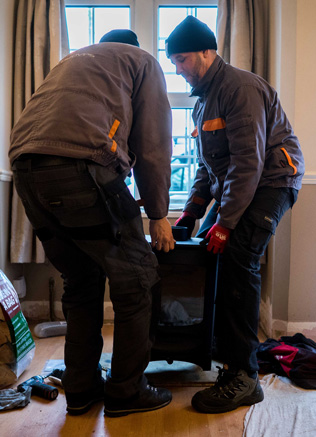
Many good tradesmen subcontract out certain tasks - this is not necessarily a problem. But it’s important you find out the extent to which work will be outsourced - and crucially, who will take responsibility if there are any issues or problems. Paul says:
I don’t use subcontractors at all - it’s all done in-house. I employ the whole team, which means I can vouch for the quality of all the work that’s done, and take complete responsibility for it.
Paul Blowers of Heatsafe Installations Ltd
Never hire a tradesman who demands the full cost of the job upfront
It is relatively common for a tradesman to ask for a deposit before work begins - typically 25% or less of the total cost of the job. This is particularly the case with projects like stove installations, where the cost of materials themselves can be substantial.
However, full payment shouldn’t be made until the project is completely finished, and you’ve thoroughly inspected all the work. Never hire a tradesman who demands the full cost of the job upfront.